

Hypocrisy on Display: Jane Eyre Chapter 7
A Jane Eyre Readalong and Teachalong

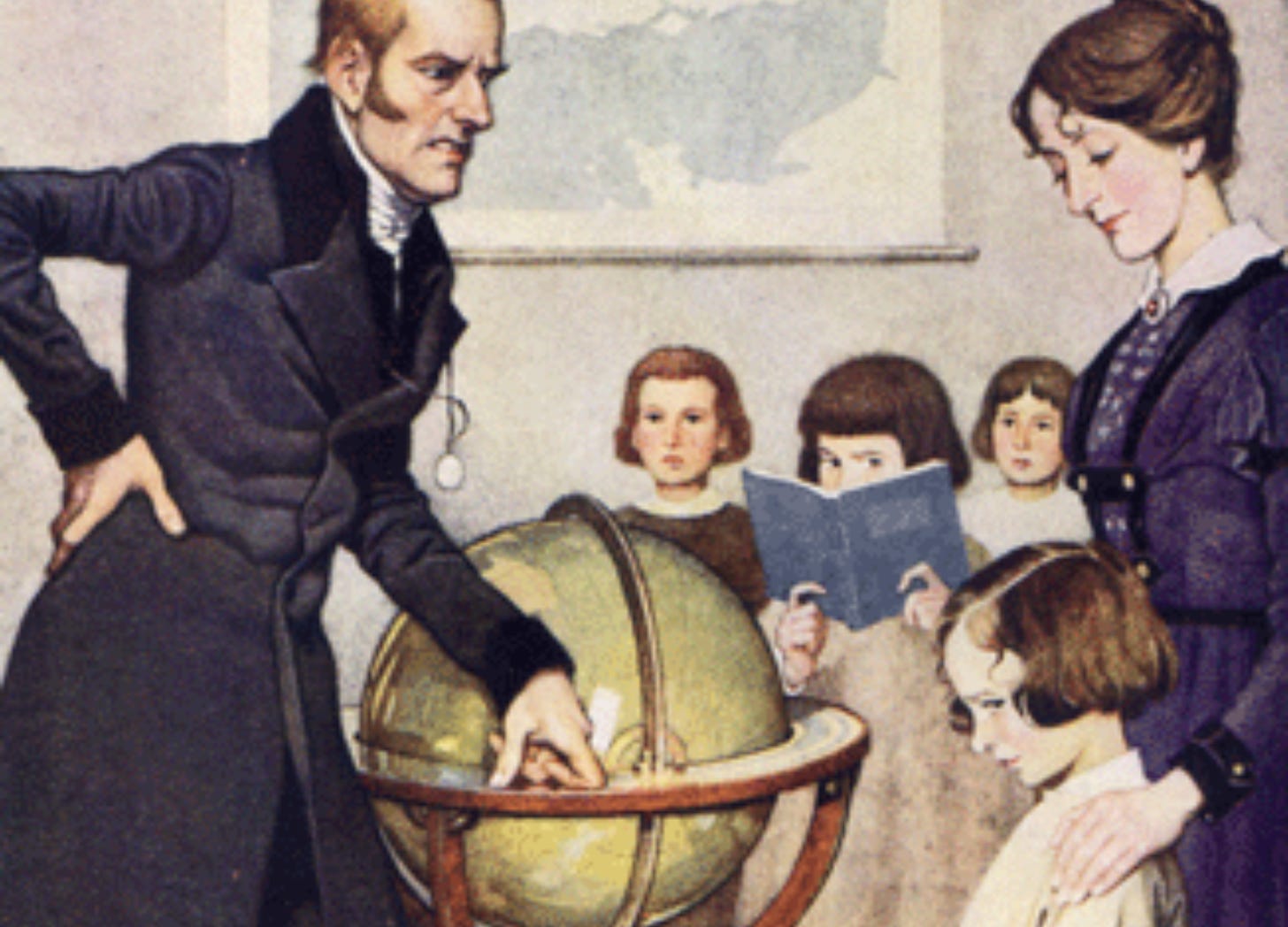
“Oh, madam, when you put bread and cheese, instead of burnt porridge, into these children’s mouths, you may indeed feed their vile bodies, but you little think how you starve their immortal souls!”
—Charlotte Brontë, Jane Eyre (Chapter 7)
Mr. Brocklehurst visits Lowood School about a month after Jane arrives. After declaring Jane reprobate, “not a member of the true flock,” he tells everyone that she is a liar and that they should not associate with her. She is then made to stand on a stool, “a pedestal of infamy,” for a punishment, and the girls are instructed not to speak to her for the rest of the day.
This chapter is laden with irony. Though the Lowood girls are starving and underclothed, Mr. Brocklehurst—the school treasurer—chastises Miss Temple over replacing a burnt meal (from Chapter 5) and over allowing a few girls to have one change of clothes during the week. He takes umbrage at a girl’s naturally curly hair only to be interrupted by his wife and daughters, who have artificially curled hair. Jane worries that Miss Temple will think her a hypocrite after Mr. Brocklehurst denounces her, but it is really his hypocrisy on display.
Chapter 7 Questions
✢ What is Sunday like for the girls at Lowood school? How is their Sabbath or “day or rest”?
✢ Mr. Brocklehurst concerns himself with minute details about the running of the school. What do his decisions about things like stockings and breakfast show you about who he is as a person? And what spiritual justification does he give for these decisions?
✢ Compare Mr. Brocklehust’s instructions on modesty to the appearance of his wife and daughters. Why do you think Charlotte Brontë juxtaposes these two scenes?
✢ How does Mr. Brocklehurst punish Jane? What does Jane observe about the school while she is enduring this punishment?
Teaching Tips
✢ Discuss Brontë’s use of irony in this chapter. In particular, highlight allusions to Phariseeism, such as, “whatever he might do with the outside of the cup and platter, the inside was further beyond his interference than he imagined.” What testimony does this give? Do we see any parallels in Christian culture today? What are the risks within our own school community?
✢ Consider Mr. Brocklehurst as a character within the book’s theme of temperance (rightly ordered passions). He makes his living off of others’ charity—taking tithe as a pastor and subscriptions from charitable donors to fund the Lowood girls’ education. In particular, what does the appearance of his wife and daughters say about how he manages that money?
✢ Mr. Brocklehurst was inspired by William Carus Wilson. Wilson was the head of the Cowan Bridge School, where Maria and Elizabeth Brontë—the two eldest Brontë children—died. Similarities between Wilson and Brocklehurst were so obvious to those that knew him that Wilson considered suing Charlotte Brontë for defamation. Brontë wrote him an apology letter, and he decided not to pursue legal action.