

Deogratias' Dilemma
On the Catechizing of the Uninstructed Chapters 1-4

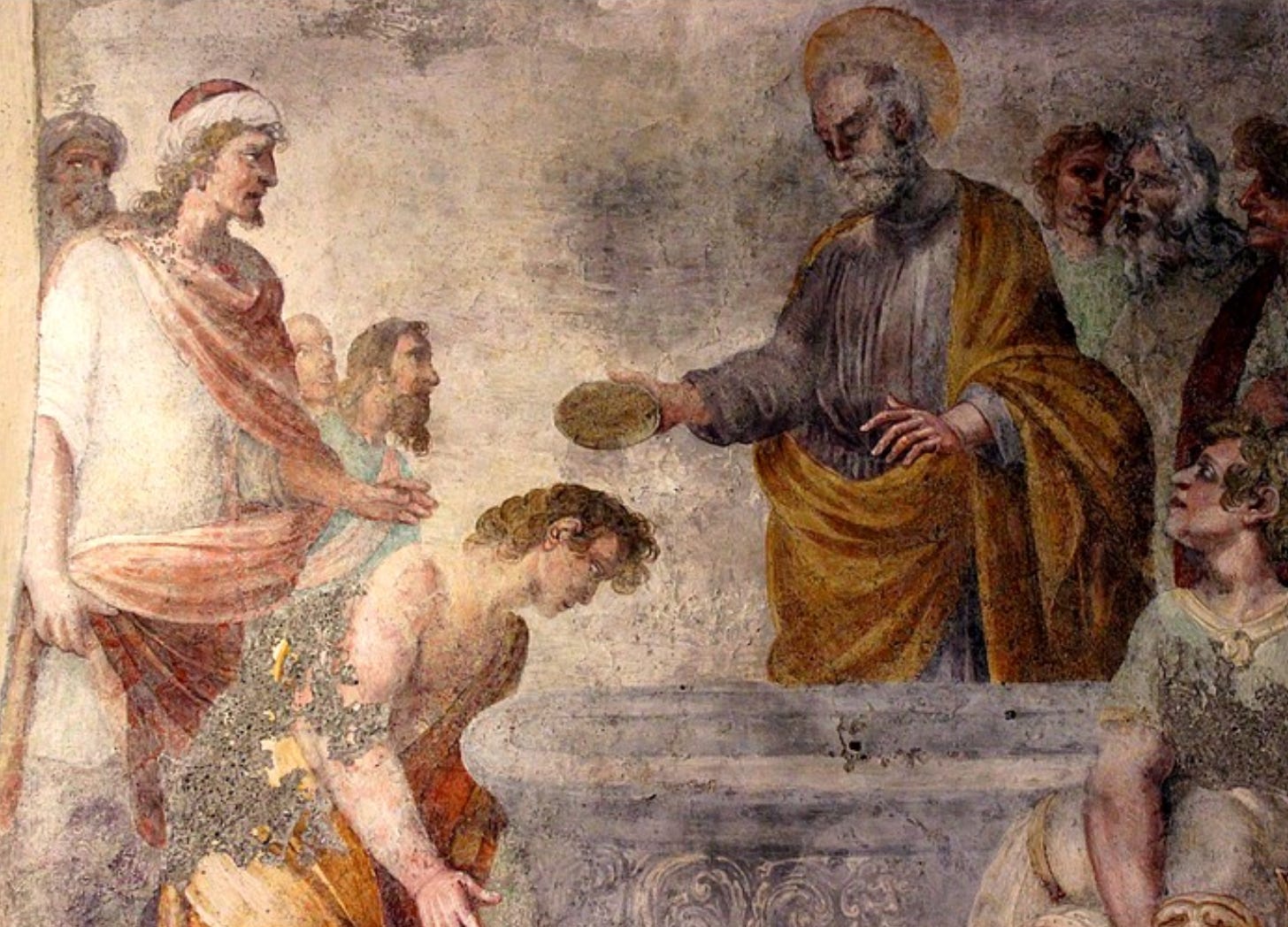
Written in 400 AD, On the Catechizing of the Uninstructed contains advice from Augustine to Deogratias, the Deacon of Carthage. I was introduced to a selection from this work by a session taught by Dr. Christopher Schlect at the Society for Classical Learning conference on June 14. I’ve since returned to it to read in its entirety.
Chapter 1
(1) Deogratias, the Deacon of Carthage, writes to Augustine, asking for help in catechizing the uninstructed. While learners are often brought to Deogratias for this purpose, Augustine summarizes: “you have made the confession and complaint that it has often befallen you that in the course of a lengthened and languid address you have become profitless and distasteful even to yourself, not to speak of the learner whom you have been endeavoring to instruct by your utterance.” (2) Augustine agrees to Deogratias’ request.
Reflection Question - What was Deogratias’ situation? What does it say about Deogratias that he is reaching out to Augustine?
Teaching Scenario - Emilia loves teaching at a classical school. But after 8 years of teaching Beowulf, she has lost a lot of her enthusiasm for the book. She knows that the problem is with her attitude and likely also her teaching but doesn’t know how to get out of her funk. What advice would you give?
Chapter 2
(3) Augustine sympathizes with Deogratias’ concern, expressing that it’s often difficult to express his ideas in speech—“I grieve over the inability which my tongue has betrayed in answering to my heart.” (4) He also encourages Deogratias that the circumstance of students being brought to him often for teaching is evidence that his teaching is not as fruitless as he thinks.
Reflection Question - Do you relate to Augustine’s tension between heart and tongue? If so, in what way?
Teaching Scenario - Cyrus, a first year teacher at your school, expresses frustration to you after a series of math lessons that didn’t go the way he wanted. He put a lot of time into his planning but could tell that about a third of his students are still confused. Additionally, he’s received a couple of emails from concerned parents that he doesn’t know how to answer. How would you coach Cyrus through this situation?
Chapter 3
(5) First, Augustine recommends an overview of the narrative of Scripture with specific treatment of “certain of the more wonderful facts.” (6) In contrast to Old Testament Jews who were faithful to an incomplete revelation, it is important for catechumens to learn all of the Scriptures.
Reflection Question - Why do you think Augustine prioritizes a survey approach leading to a deeper study of Scripture? Do you agree with his advice?
Teaching Scenario - It is almost summer. Stephanus has been assigned to teach a middle school Old Testament Survey style class next school year. He’s intimidated by the amount of content he has to cover in a class that only meets a couple of times a week and is particularly concerned to balance his students’ anticipated workload. What guidance would you give Stephanus?
Chapter 4
(7) Augustine argues that Christ’s advent was for love and that God is gracious for loving us first—as it is easier to return a love already given than to begin loving on our own. Christ’s coming in love is a great mercy to the sinner. (8) Christ, therefore, is an example of divine love and human humility who breaks down our sin and pride. As teachers, the responsibility is to teach in light of this love and humility, with the goal of reconciling our students to God, leading them to believe in, hope in, and love Him.
Reflection Question - How does Christ’s example serve as a model for the Christian teacher? How does Augustine’s goal for education influence your teaching?
Teaching Scenario - Flora is a well-liked Latin teacher. However, 9th grade has a reputation for being difficult, and a big part of that is due to one student’s influence. Nero openly complains about any work he’s asked to do and has proven a distraction to whatever students are near him—Flora has changed his seating assignment several times. She’s not used to such pushback because she plans engaging lessons and is intentional about the amount of work she assigns. When she realizes that she’s beginning to resent Nero, Flora knows that she has to do something. What should she do?
Catechizing the Uninstructed
See more from this series.
Chapters 9-12
Chapters 13-16
Chapters 17-20
Chapters 21-24
Chapters 25-27
Original Text - On the Catechizing of the Uninstructed by Augustine